Beyond the Parking Bay: Mechanical vs Conventional Parking
As urban developments become denser, parking is becoming an increasingly important part of project planning. Limited land availability, rising development requirements and growing vehicle ownership are making it necessary for developers and architects to consider how parking can be accommodated without consuming excessive development space.
The choice between conventional and mechanical parking depends on more than the number of vehicles a project needs to accommodate. Available footprint, circulation, structural conditions, vehicle access, parking demand and long-term operations all influence which approach is appropriate.
What Is the Difference Between Conventional and Mechanical Parking?
Conventional parking typically accommodates vehicles across dedicated parking bays, with additional space required for drive aisles, ramps, turning areas and vehicle circulation. As parking demand increases, more horizontal space may need to be allocated to parking.
Mechanical parking systems use engineered mechanisms to position vehicles vertically or within compact configurations. Depending on the system, vehicles can be stacked, shifted horizontally and vertically, or moved automatically to their designated parking positions.
This allows parking capacity to be considered in relation to the available footprint rather than only the horizontal area of the site.
How Does Each Approach Use Space?
Space utilisation is one of the key differences between conventional and mechanical parking.
A conventional parking layout requires sufficient circulation space for vehicles to enter, manoeuvre and access individual parking bays. This can result in a significant portion of the available area being dedicated to movement rather than vehicle storage.
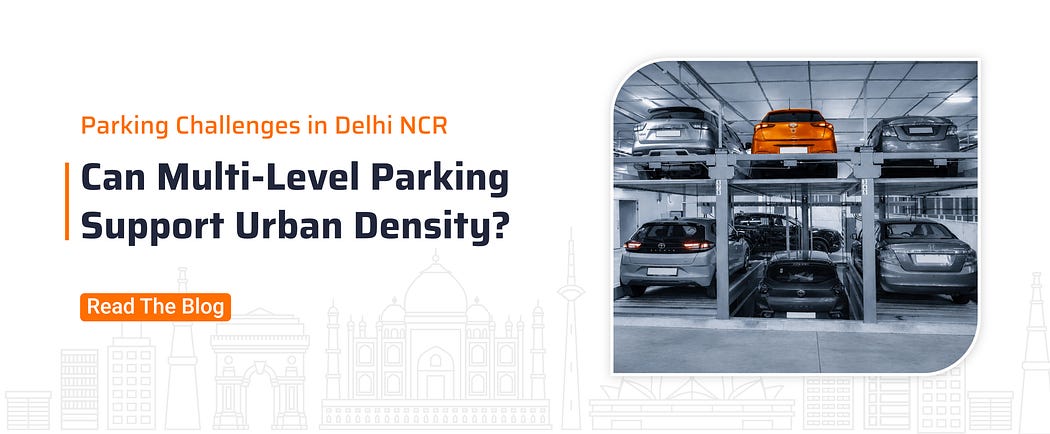
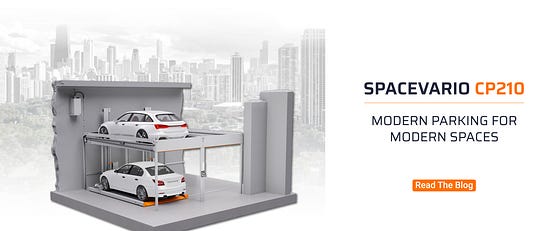
Mechanical parking systems can reduce the space required for conventional circulation by using vertical space or mechanically assisted vehicle movement. Stack parking, for example, allows vehicles to be positioned one above another, while puzzle parking uses horizontal and vertical movement to arrange vehicles within a defined footprint.
For projects where land or basement space is limited, this approach can help accommodate parking while making more effective use of the available area.
When Does Mechanical Parking Make Sense for Urban Projects?
Mechanical parking can be considered when a project needs to accommodate a defined parking requirement within a constrained footprint.
This can include residential developments, commercial buildings, mixed-use projects, hotels, and urban redevelopment projects where allocating additional land to conventional parking may not be practical.
The suitability of a mechanical parking system also depends on how the parking will be used. A residential project with long-duration parking may have different requirements from a commercial development with higher vehicle turnover. Similarly, visitor parking may require different access considerations from spaces assigned to residents or employees.
Understanding these usage patterns helps determine whether a mechanical solution, conventional parking, or a combination of both is appropriate.
What Should Developers Consider Before Choosing a Parking System?
Parking planning should begin with the project's overall requirements rather than with a particular parking technology.
Developers, architects and consultants should consider the available footprint, required parking capacity, vehicle dimensions, parking duration, access patterns and expected turnover. Structural conditions, floor-to-floor height, circulation, fire and life-safety requirements, MEP services and maintenance requirements also need to be considered during planning.
The selected parking system should be integrated with the building design from the early stages. This allows the parking layout, structural design and building services to be coordinated instead of adapting the parking system to a completed design.
Is Mechanical Parking Always the Better Option?
Mechanical parking is not a universal replacement for conventional parking. The right approach depends on the project's site conditions, parking demand and planning objectives.
Conventional parking can remain practical where sufficient space is available and circulation requirements can be accommodated efficiently. Mechanical parking becomes particularly relevant where available space is constrained, and greater parking capacity needs to be achieved within a defined footprint.
In some projects, a combination of conventional and mechanical parking may also provide a practical solution.
The objective is therefore not simply to choose between two parking methods. It is to identify the approach that makes the most effective use of the space and conditions available.
At KLAUS Multiparking, this engineering-led approach focuses on developing parking solutions around the requirements of each project. Solutions such as stack parking, puzzle parking and fully automatic parking can help projects explore different ways of using available space more efficiently.
As urban land becomes increasingly valuable, parking planning needs to consider more than where vehicles will be parked. It needs to consider how the entire parking requirement can be integrated into the development while making effective use of limited urban space.


.jpg)